
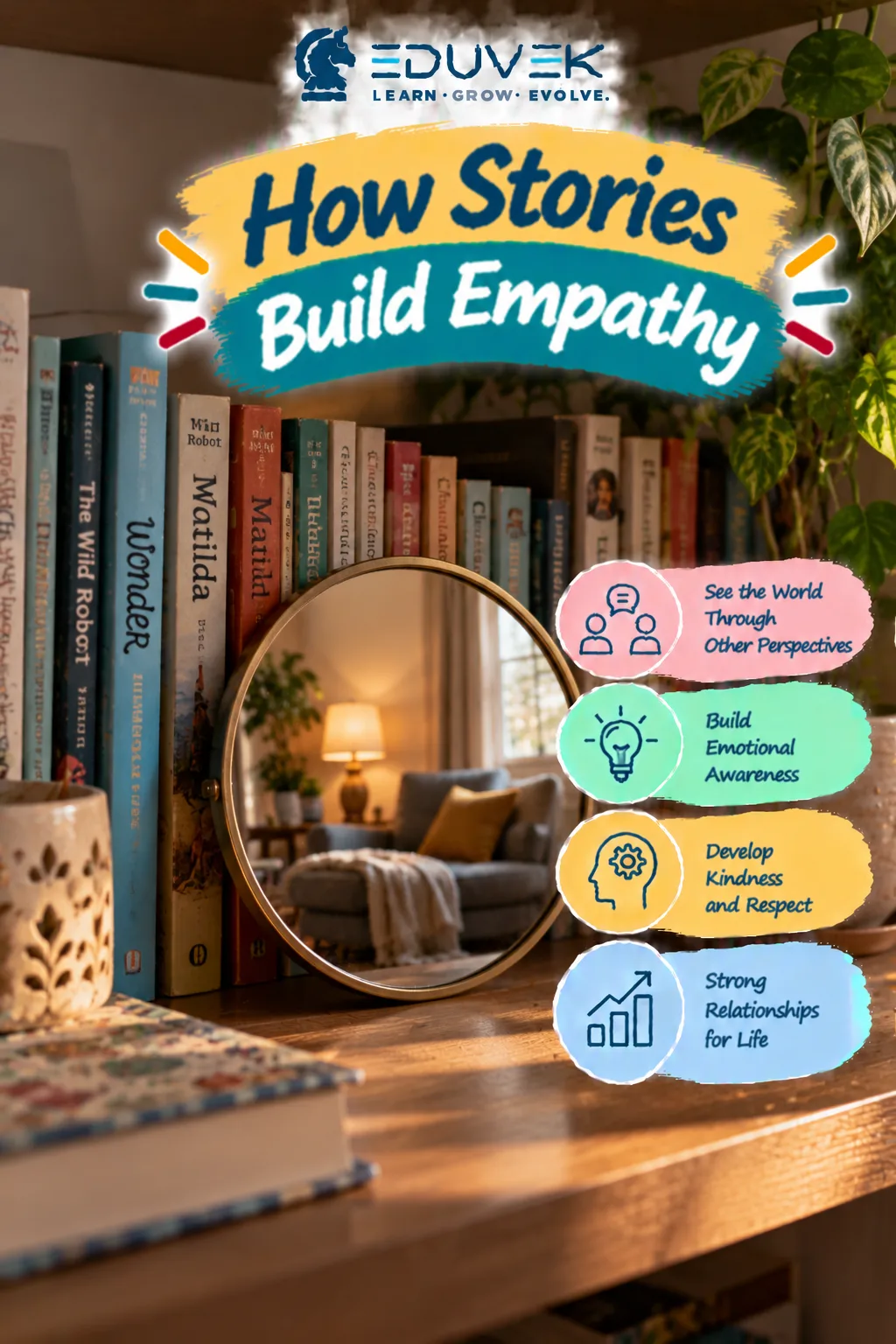
The claim that reading fiction makes people more empathetic is appealing, widely repeated, and supported by weaker evidence than most people assume. There is something real underneath it. It's worth describing accurately, because the overstated version is easy to dismiss and the honest version isn't.
What the research actually shows
A well-known set of studies suggested that reading literary fiction produced immediate improvements in reading other people's mental states. Those findings have had a difficult time on replication, and the current position is much less certain than the headlines from a decade ago.
What holds up better is more modest: people who read a lot of fiction tend to score somewhat higher on measures of social understanding. That's a correlation, and it can plausibly run either way — people who are interested in other people's inner lives may simply read more novels.
So the honest version is: a plausible mechanism, a real association, and no good basis for claiming that a book changes a child's empathy in a measurable way.
The mechanism that makes sense
Fiction does something unusual. It gives you sustained access to what someone else is thinking — not their behaviour, which is all you get in real life, but the reasoning behind it.
A child reading a novel spends hours inside the perspective of someone who isn't them, including characters who are unlikeable, mistaken, or whose reasons only become clear later.
That's genuinely rare practice. Real life offers almost no opportunity to know why someone did something from the inside.
Where it plausibly matters most
Characters who are wrong. A book where you understand why someone did something indefensible does more than a book where good people do good things.
Characters unlike the reader. Different circumstances, different country, different era, different kind of family.
Length. A long book with one perspective held across hundreds of pages is doing something a short story can't. Sustained immersion is most of the proposed mechanism.
What parents can reasonably do
Not much engineering, and that's the point.
Choosing books to teach a lesson tends to fail — children detect it, and a book read as a moral instruction is read defensively. The volume of reading matters more than the curation.
What does seem worth doing is talking about characters rather than plots. Why do you think she did that? is a better question than what happened next?, and it costs nothing.
And allowing complicated books. The instinct to protect children from difficult material is understandable, and the books that stay with people are usually the ones where something genuinely went wrong for someone.
What not to claim
That reading will make a child kind. Plenty of unkind people read extensively.
Reading gives practice at imagining other minds. What a person does with that is a separate matter, shaped by much more than their reading.
Why it's still worth saying
Because the thing fiction does — holding you inside another person's reasoning for a long time — has no real substitute, and few things a child does offer it. That's a good enough reason without needing the stronger claim.