
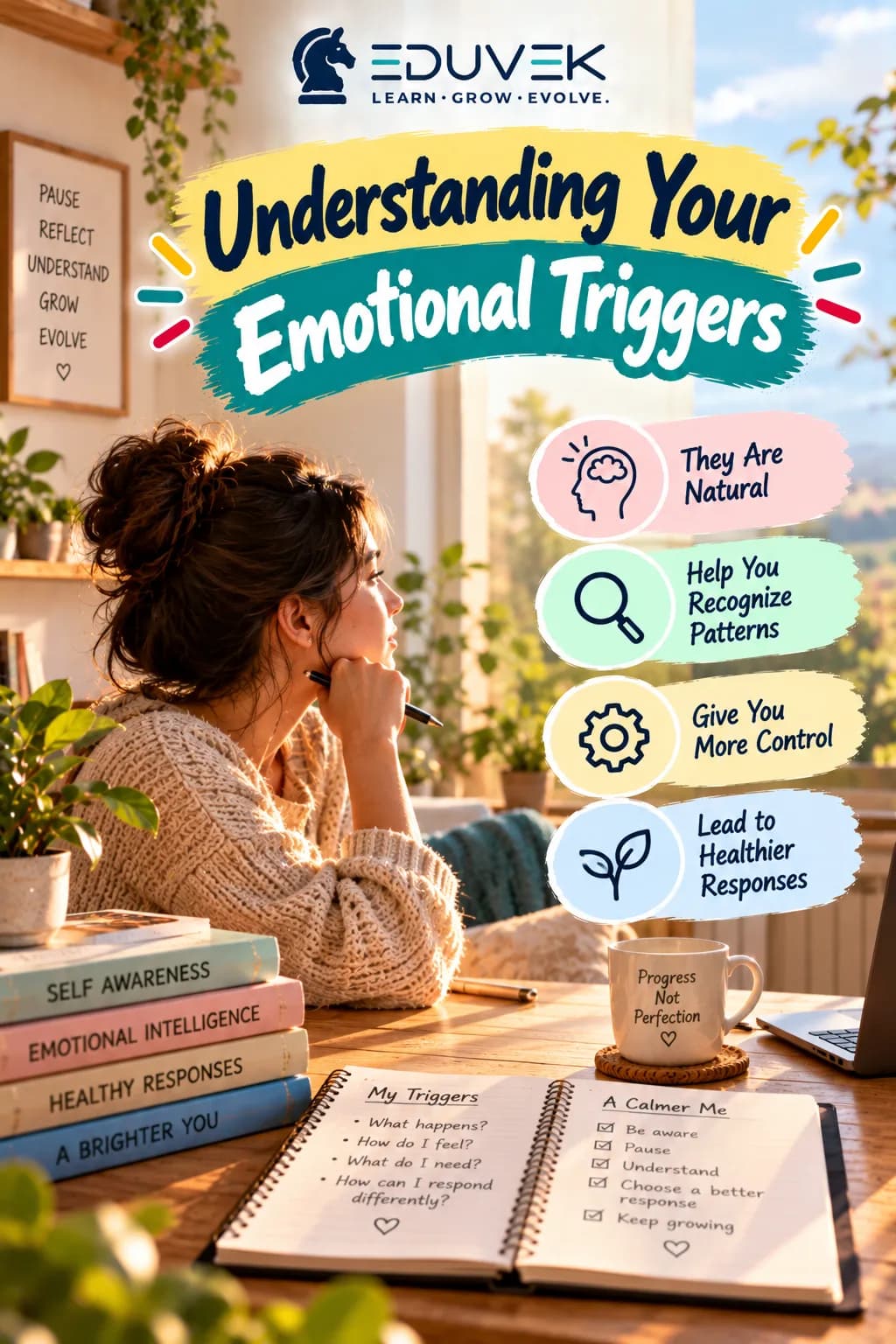
A trigger is something small that produces a reaction out of proportion to it — a tone of voice, a phrase, being interrupted, a particular kind of silence. The size of the response is the identifying feature, and it's usually the thing people are most embarrassed about afterwards.
What's actually happening
The reaction arrives before the thinking. By the time you've assessed the situation, your heart rate has already changed and something has already been said.
That ordering matters. It explains why deciding not to react doesn't work, and why people who understand their triggers perfectly still get caught by them.
Recognising yours
Most people can name a few if asked, and miss the ones they've built a life around avoiding.
Useful signals: a reaction that surprises you afterwards, a response you then have to apologise for, a situation you decline without quite knowing why, or a physical change — heat, tightening, a jolt — before you've registered a thought.
The gap between stimulus and reaction
The practical aim isn't to stop being triggered. It's to widen the gap slightly — to notice the physical signal early enough that the reaction isn't the only thing available.
That's a trainable capacity, and it's mostly a matter of noticing sooner. The earlier you catch it, the more choice exists.
Why physical awareness is the way in
The body registers it first. People who practise attending to physical sensation often report catching things earlier — not because they've resolved the underlying cause, but because they notice the signal while it's still small.
That's the mechanism body-based practices actually offer here. Not elimination; earlier warning.
What to do in the moment
Not much, and that's the point. Slower breathing with a longer exhalation. Feeling your feet on the floor. Leaving the room if you can.
None of these resolve anything. They buy a few seconds, which is frequently the difference between a reaction and a response.
What's underneath
Triggers usually have a history, and knowing it can be genuinely useful — if only because it makes the response make sense rather than seem like a personal defect.
But understanding alone rarely disarms it, which is why people tend to want both: some sense of where it came from, and some practice in catching it earlier.
When it's more serious
Reactions tied to a traumatic event, or severe enough to damage your relationships or work, belong with a licensed therapist. There are established treatments for this. General wellbeing practices are not among them.