
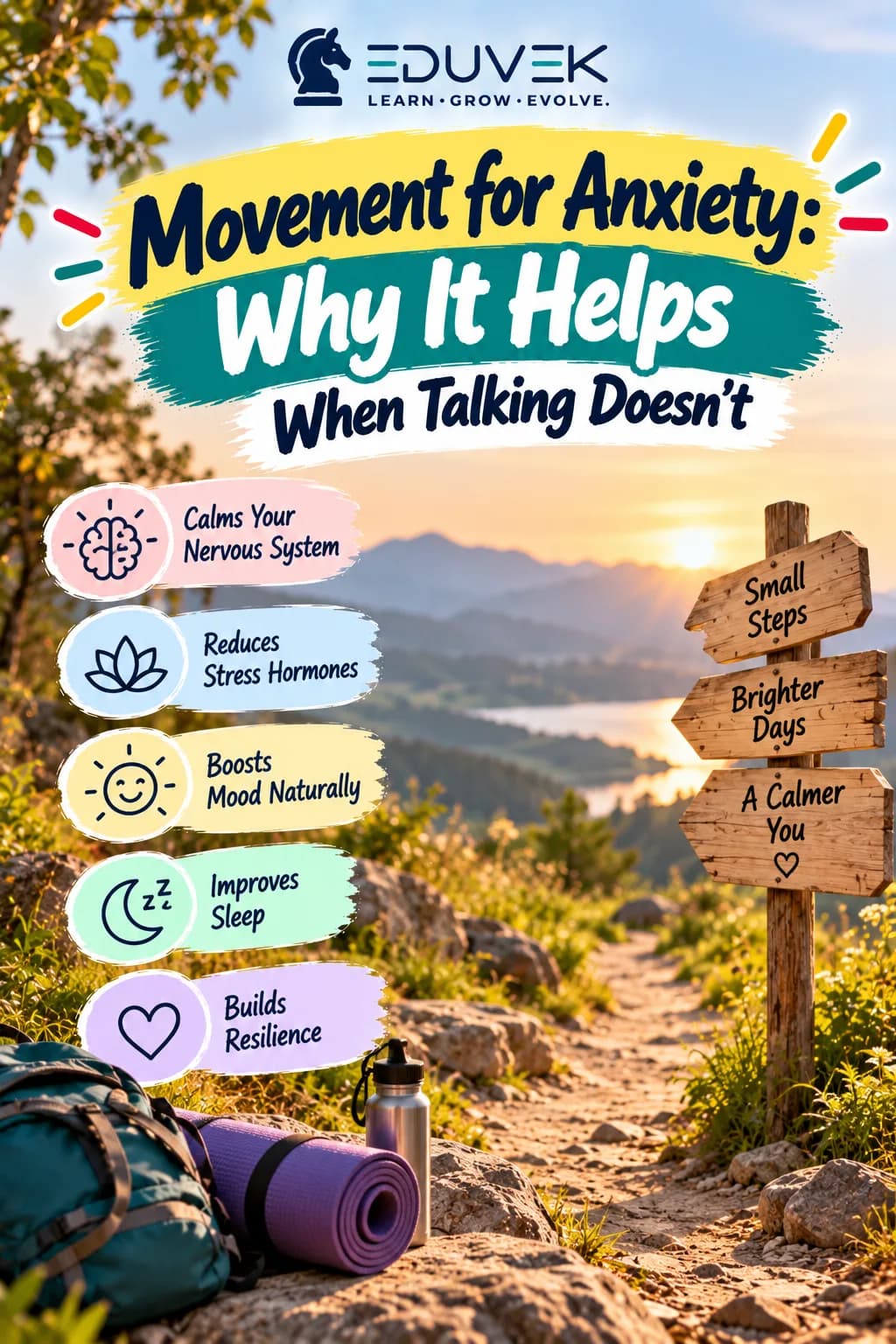
Anxiety is a physical event as much as a mental one — raised heart rate, shallow breathing, tension held somewhere specific. That's part of why talking about it sometimes doesn't touch it, and why people who've understood their anxiety thoroughly can still be at its mercy.
What anxiety does in the body
The state is a mobilisation. The body prepares for something: breath goes high and quick, muscles tighten, digestion deprioritises, attention narrows.
If the threat were physical this would be useful. For a deadline or a difficult conversation it's mostly inconvenient — the mobilisation has nowhere to go and stays switched on.
Why insight alone isn't enough
You can know precisely why you're anxious and remain anxious. Understanding operates in one register and the mobilisation in another, and the second doesn't take instructions from the first.
This is why "there's nothing to worry about" is useless advice even when it's true.
What movement does differently
Movement works on the physical layer directly. Slow movement coordinated with breathing — particularly longer exhalations — tends to shift people out of the mobilised state, and it does this without requiring you to think your way there.
The evidence for exercise helping with anxiety generally is reasonably good. Which specific form is best is much less settled, and anyone claiming precision about mechanisms is going beyond what's known.
Why gentle rather than intense
Both can help. But intense exercise raises heart rate and breathing, which for some anxious people resembles the thing they're frightened of and makes it worse.
Slow practice goes the other way — it lowers the signals rather than raising them, which is often more useful when the aim is to settle rather than discharge.
What's realistic
Movement is not a treatment for an anxiety disorder, and shouldn't be presented as one. For many people it's a reliable way of changing their state in the moment and, practised regularly, of being less permanently keyed up.
If anxiety is interfering with your work, sleep or relationships, that's a conversation for a doctor or a therapist. Practice sits alongside that, not instead of it.
Starting
Ten minutes is enough to notice something. Regularly matters more than long. And doing it before you need it is more effective than only reaching for it mid-episode, because the practice is partly about becoming familiar with a state you can return to.