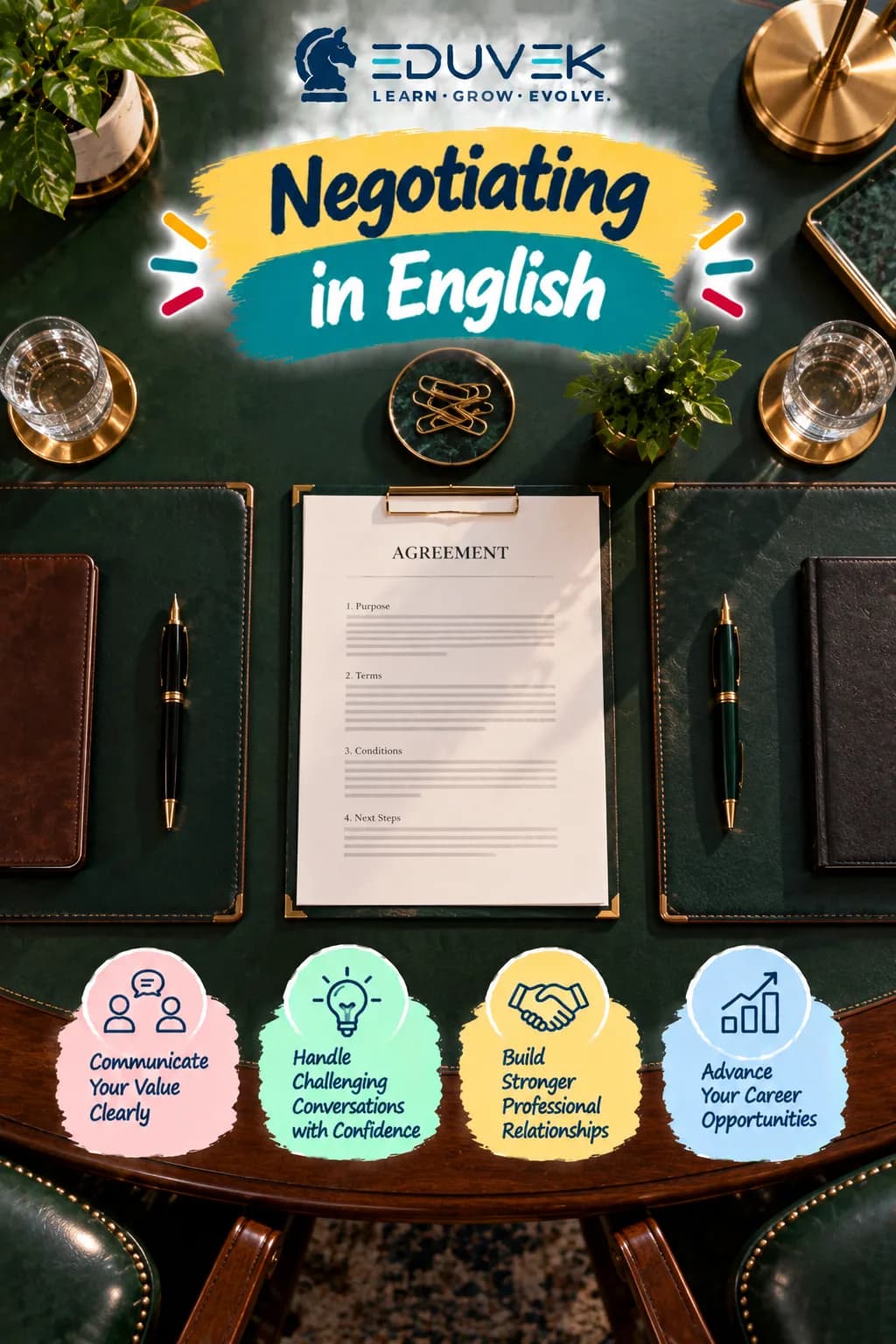
Negotiation is the professional situation where second-language speakers most often concede more than they meant to — not from weakness, but from a handful of mechanical features of the conversation that work against anyone operating in an additional language.
Three things that cost you
Silence. English-speaking negotiators use pauses deliberately. If you're uncomfortable in a second language, silence feels like a failure to respond, so you fill it — and filling it usually means conceding, qualifying or explaining.
Speed. Concessions happen fast. If you need an extra two seconds to process the implication of what was just offered, you can agree to something before you've assessed it.
Softening. The habit of hedging makes a firm position sound negotiable. We'd probably need something closer to thirty invites a counter at twenty-five. We need thirty does not.
Let the silence sit
The single highest-value habit here. When someone makes an offer, say nothing for three seconds.
It's uncomfortable and it is also standard practice. The person who fills the silence usually moves first, and if that's not you, it's them.
Buy time out loud
You're allowed to slow the conversation down, and doing it openly costs you nothing.
Let me make sure I've got that. · Can you run through the last part again? · Give me a moment with that.
These read as careful rather than slow. Nobody in a negotiation is surprised by someone taking a moment.
Conditional language is your main tool
The most useful structures in negotiation are the ones that keep options open.
If you can move on the timeline, we could look at the price.
That would work provided the scope stays as it is.
We'd be able to do that if —
These let you explore without committing, and they're worth drilling until they come out without thought, because they're where the actual work happens.
Separate questions from concessions
Why do you need it by then? is a question. It is not agreement that you'll do it by then.
Under pressure, people in a second language sometimes answer questions in a way that accepts the premise. Noticing the difference is worth more than any phrase.
Don't negotiate against yourself
The most common error, and not a language error.
We need thirty — but obviously we can be flexible, and if that's difficult we could probably look at something else.
Three concessions before they've responded once. Say the number and stop.
Prepare the numbers, not the script
You can't script a negotiation. You can decide in advance what you want, what you'll accept, and where you walk away — and knowing those three means you're not calculating under pressure while also operating in a second language.
If it moves too fast
Say so. I'd like to take this away and come back to you tomorrow. Entirely normal, and considerably better than agreeing to something you haven't fully understood.