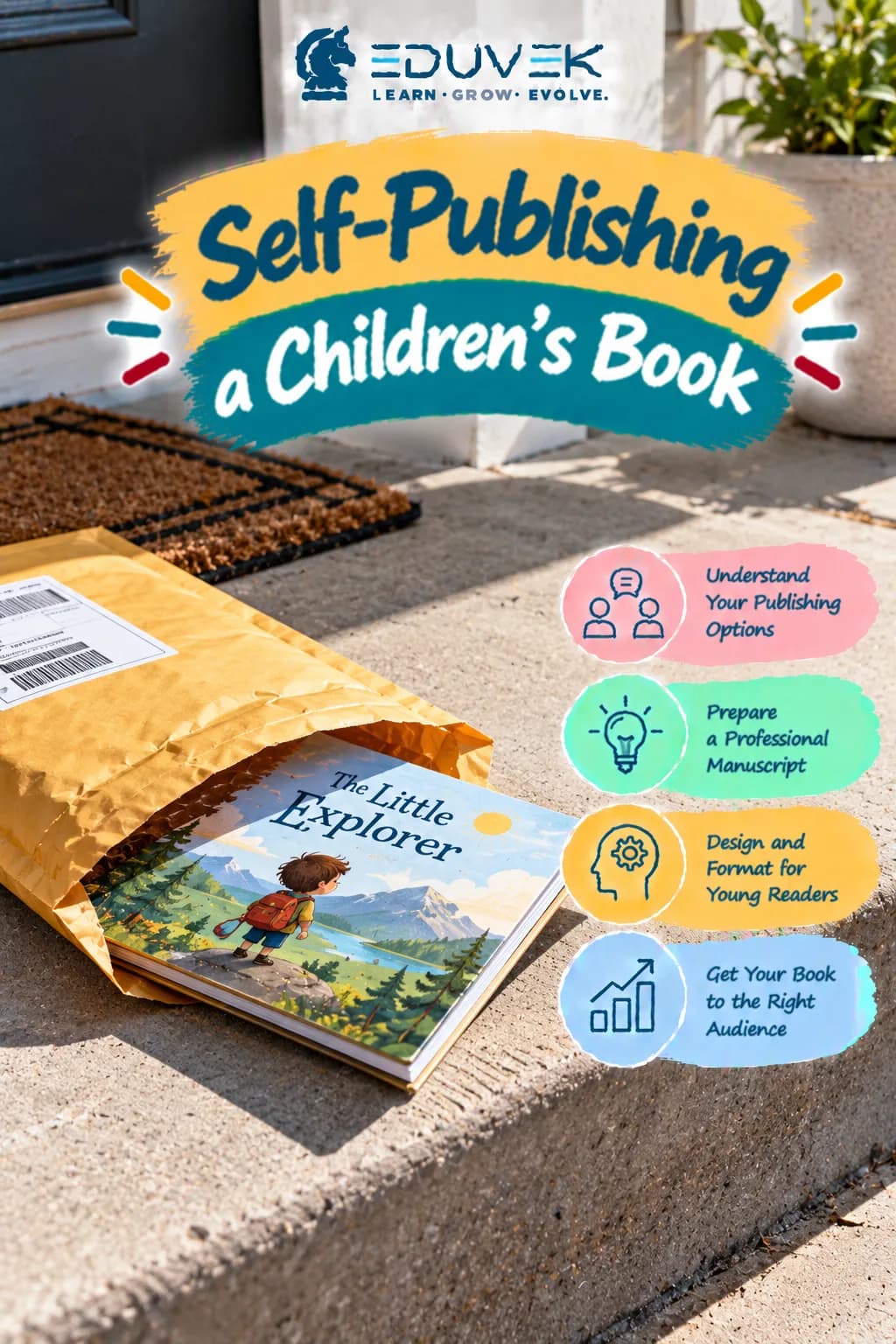
Self-publishing a children's book is entirely achievable and considerably harder than self-publishing for adults, for one reason: the illustrations. Everything else about the process is manageable, and almost nobody budgets properly for the art.
Why this genre is different
A self-published novel costs you a cover and some editing. A self-published picture book needs twelve to fourteen illustrated spreads, drawn consistently, by someone competent.
That's the dominant cost by a wide margin, and for a full picture book it commonly runs into thousands rather than hundreds. Rates vary enormously by illustrator, experience and region, so get several quotes before you plan anything.
It's also where self-published children's books are most visibly weaker than traditionally published ones. Parents, teachers and librarians compare against professionally illustrated books, and amateur art is the first thing they notice.
Getting the illustration right
Pay properly or don't do it. This is not the place to economise. A good book with poor art fails; the art is the product in this genre.
Use a written contract. It should state what you're buying — commonly a licence for specified uses, not necessarily ownership — plus delivery dates, number of revisions, file formats and resolution, and what happens if either of you walks away.
Check consistency. The single most common failure in self-published picture books is a character who changes between spreads. Ask to see the same character in three different poses before committing.
Budget for text placement. Someone has to lay the words into the artwork so they're legible against it. That's a design job, and it's frequently forgotten.
Print, and why it's awkward
Children's books want to be physical. Children handle them, and board books and hardcovers are what parents buy.
Print-on-demand handles paperbacks and some hardcovers well. Board books generally require an offset print run, which means ordering a large quantity upfront and storing it. That's a genuine commitment, and it's where self-published children's publishing stops being low-risk.
Colour printing also costs substantially more per unit than black and white, which squeezes your margin on a product that competes against heavily discounted trade books.
ISBNs
Worth knowing because it differs by country. In Canada, ISBNs are free from Library and Archives Canada. In the United States they're sold through Bowker and are not cheap, particularly in blocks.
If you're in Canada, use the free route.
What you're taking on
Editing, which a children's text needs as much as any other. Design and layout. Printing and distribution decisions. Pricing. And all of the marketing, which in this genre means reaching adults — parents, teachers, librarians, booksellers — not children.
When it's the right choice
For a book with a specific, reachable audience: a community, a language, a particular school network, a subject too narrow for a trade publisher. For a book you want to exist regardless of commercial return. And for authors who want control and are prepared to do the work.
When it isn't
If you're hoping for bookshop shelves and school-board adoption, traditional publishing still does that better. And if the illustration budget isn't there, waiting is better than publishing a book with art that undersells the writing.