
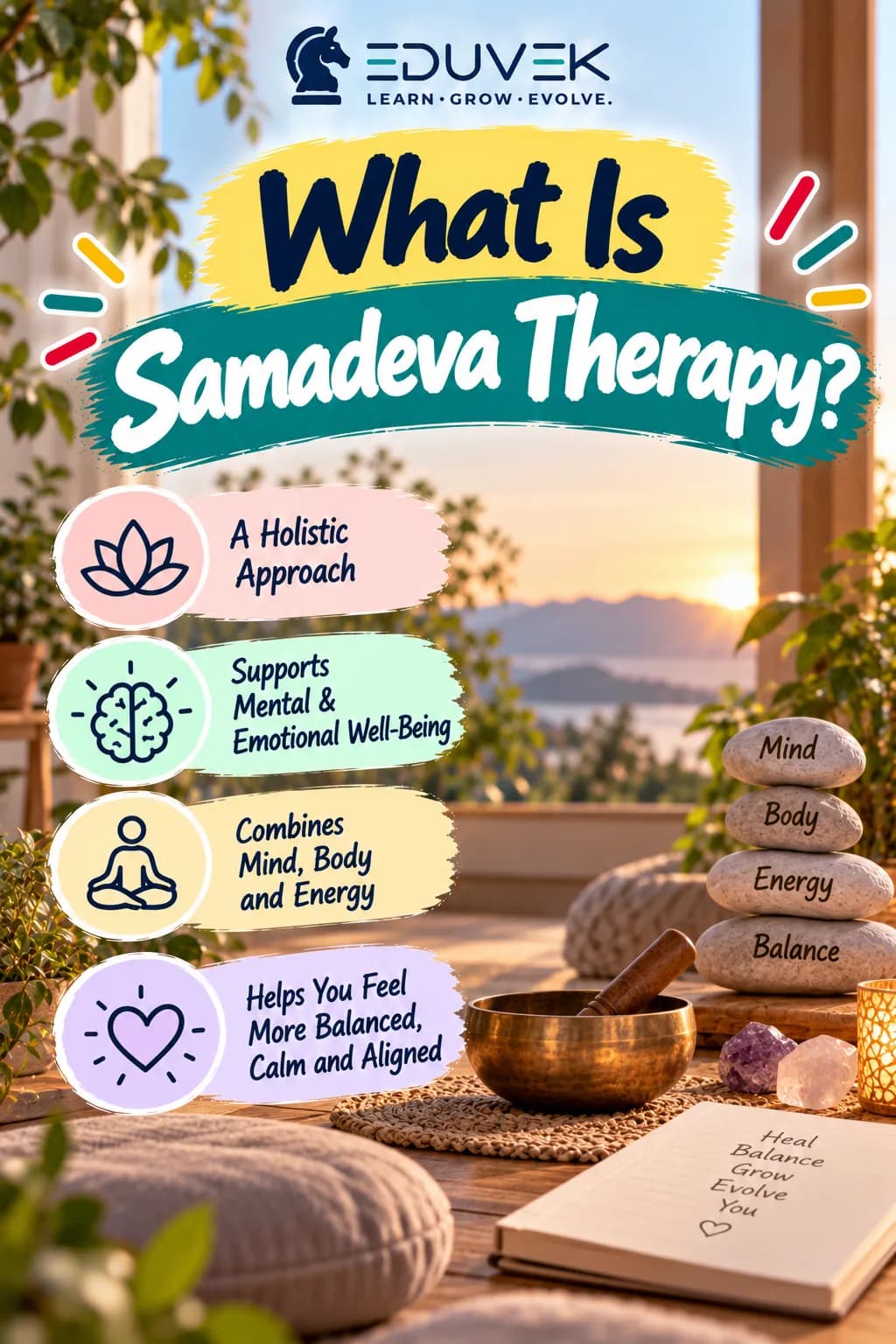
Samadeva is a body-oriented practice combining movement, gesture and attention, developed within a broader system of personal development work. It's taught as a set of practices rather than as a medical treatment, and understanding what it is — and isn't — matters before booking anything.
The approach
Body-oriented practices share a premise: that states which are difficult to reach through conversation can sometimes be approached through movement, breath and attention instead.
Samadeva works in that family. Sessions typically involve guided movement sequences and attention to physical sensation, with a facilitator directing the practice. The specific forms vary by practitioner and by what a session is for.
Note for Liubov: this section describes the general approach. Please confirm or correct the specifics of how you actually work — session length, format, what a first session involves — so the page is accurate to your practice.
What a session tends to involve
Guided movement rather than exercise. Attention to what's happening physically while you do it. Often quiet, often slower than people expect.
Sessions are usually an hour or so, and can be done one to one or in a small group.
What it isn't
It isn't psychotherapy, and a Samadeva practitioner is not a therapist unless separately qualified. It isn't a medical treatment and doesn't diagnose anything.
It isn't a replacement for professional mental health care. If you're dealing with something serious — depression, trauma, a crisis — that belongs with a licensed professional, and a responsible practitioner will say so.
Who looks into it
People drawn to body-based approaches, often after finding conversation-based ones incomplete. People in a period of transition. People carrying stress they can feel physically and can't talk their way out of.
Also, frequently, people who are simply curious about a practice they've encountered.
Being a careful consumer
Ask what training the practitioner has and from where. Ask what a session involves before you arrive. Ask what they do if something difficult comes up.
Be wary of anyone promising specific outcomes, claiming to treat a diagnosed condition, or suggesting you stop other care. Those are the signals worth paying attention to in any practice of this kind.
An honest note
Practices like this aren't supported by the body of clinical evidence that established therapies have. That doesn't make them worthless — people find them valuable for reasons that are real to them — but it does mean they should be approached as exploration rather than treatment, and described that way by anyone offering them.