Understanding English without being able to speak it is one of the most common places learners get stuck — and it isn't a sign you've plateaued for good.
Understanding and speaking are different skills
Recognising English as it comes at you (a passive skill) and producing it live, on demand (an active skill) are genuinely different abilities. It's completely normal for comprehension to race ahead while speaking lags behind — they're trained differently.
The translation trap
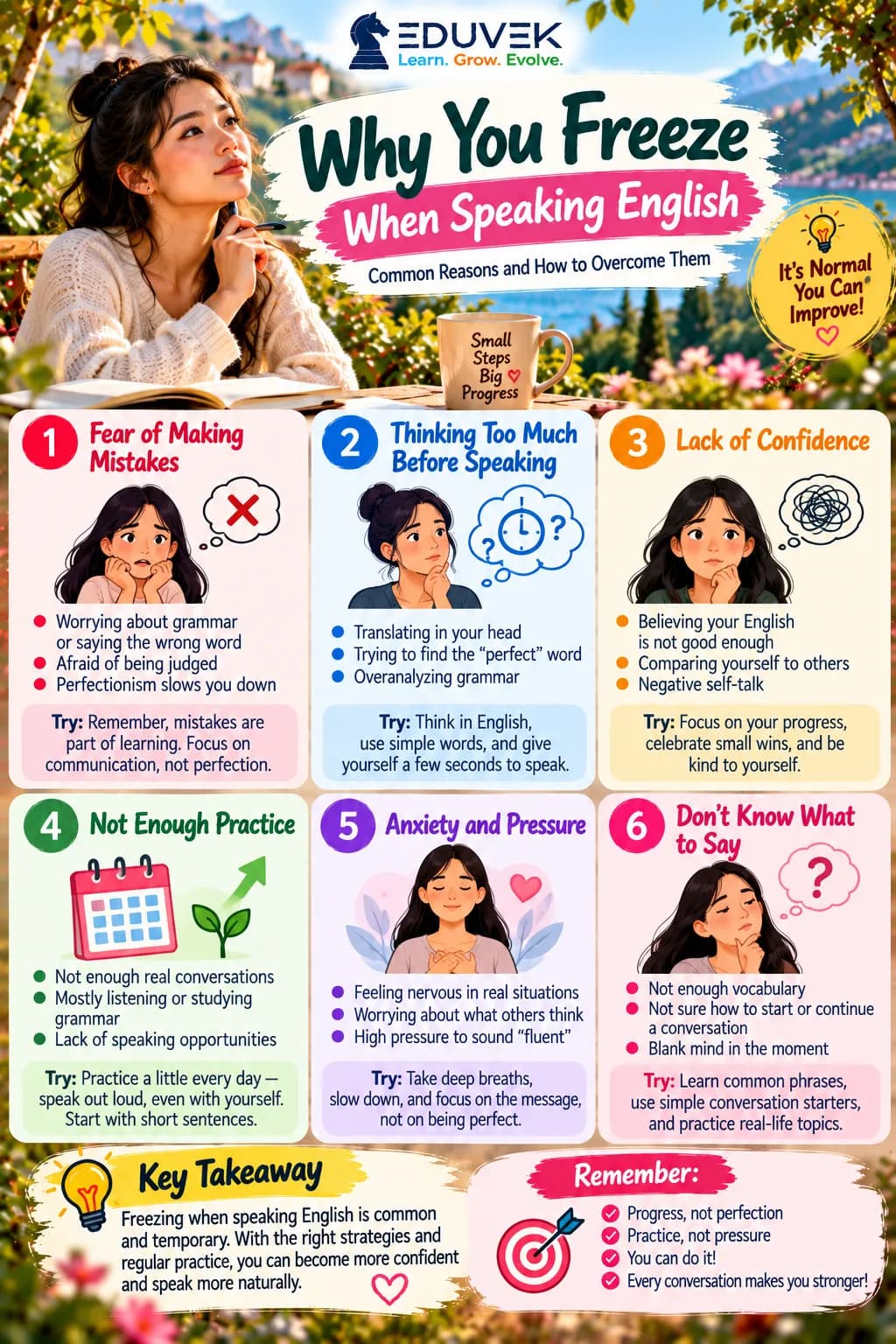
Composing a sentence in your first language and translating it in your head is slow, and it tends to stall halfway through. Fluency comes from learning to think in English — starting with small, familiar chunks rather than building each sentence from scratch.
Perfectionism and fear
Waiting to speak until it will come out flawless is what keeps many capable learners silent. The freeze is usually nerves, not a lack of words — the vocabulary is often already there, waiting behind the worry about getting it wrong.
How to unfreeze
The fix is output, not more input: speak often and at low stakes, lean on memorised phrases and chunks you can deploy instantly, and let mistakes happen without stopping to correct every one. More listening and reading grows comprehension; speaking improves by speaking.