
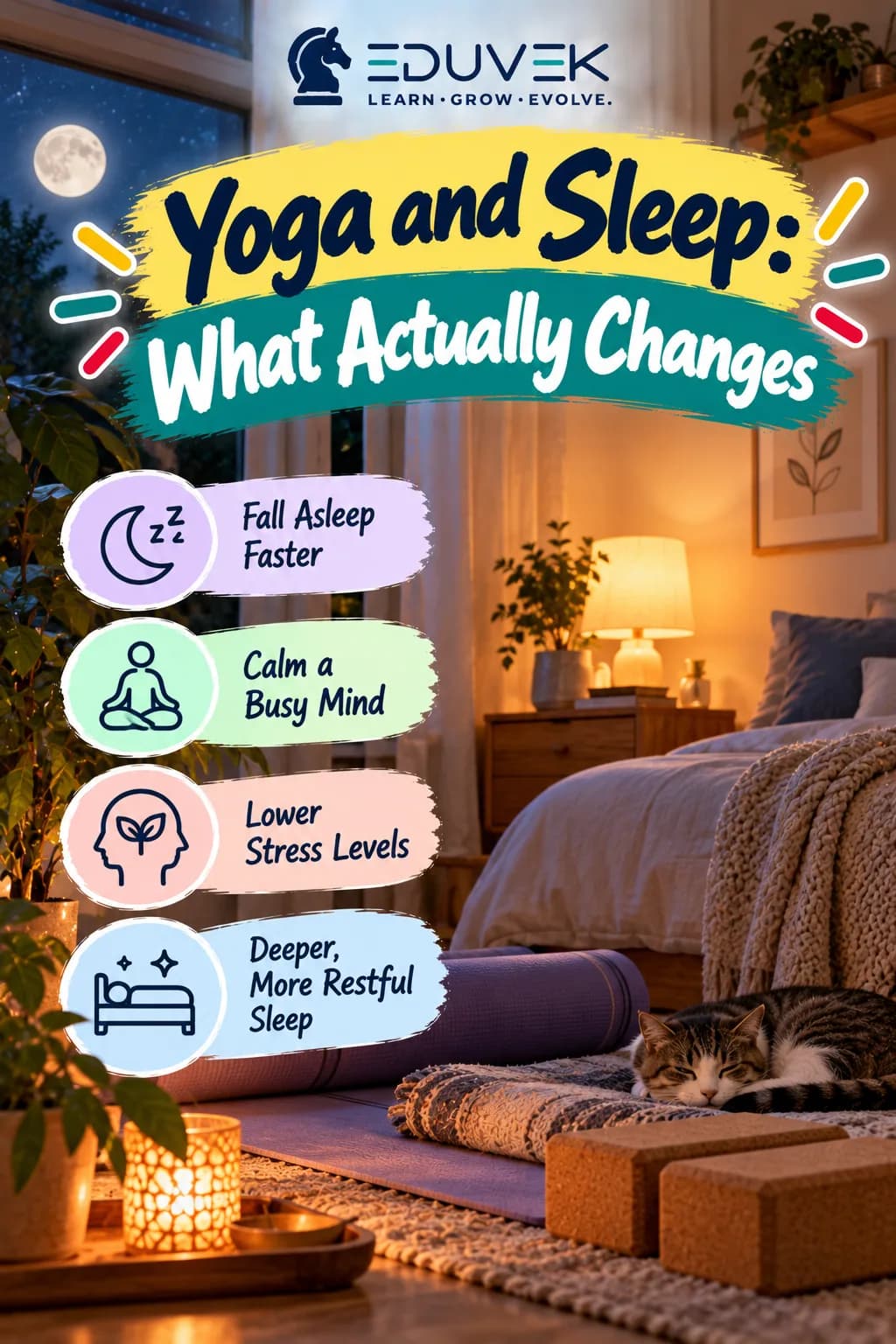
Most sleep problems in otherwise healthy adults aren't about the sleep. They're about the state you arrive in bed with — still mobilised, still thinking, physically braced. Evening movement practice works on that, which is why it sometimes helps where sleep advice hasn't.
The common pattern
Tired all day, awake at bedtime. Or asleep quickly and awake at three. Or technically asleep for eight hours and unrefreshed in the morning.
All three share something: the nervous system hasn't stood down. Sleep happens, but shallow — the body stays partly on duty.
Why winding down isn't the same as stopping
People often treat the evening as a reduction in activity — sitting instead of moving, scrolling instead of working. That's less stimulating but it isn't the same as settling, and a body that's been braced all day frequently stays braced through it.
Something more deliberate is usually needed to actually change state.
What tends to help
Slow movement with long exhalations. Gentle stretching for wherever you hold tension — commonly jaw, shoulders, hips. Positions held long enough for the body to notice, which is longer than feels natural.
Twenty minutes is plenty. The aim isn't exercise, and anything that raises your heart rate significantly is working against you at that hour.
What the evidence says
Studies on yoga and sleep quality are generally encouraging, particularly for falling asleep faster and reporting better quality. The research is mixed in rigour and the effects are modest rather than dramatic.
So: reasonable to expect some improvement, unreasonable to expect a cure for a serious sleep disorder.
The screen question
Worth being honest — the effect of evening screen use is probably less about blue light than about what you're doing with the screen. Work email, bad news and anything that generates a reaction will keep you mobilised regardless of the display.
When it's more than a routine problem
Loud snoring with daytime sleepiness, long-standing insomnia, or waking unrefreshed no matter what you change, all deserve a doctor. Sleep apnoea is common, frequently missed, and not something any practice addresses.
Making it a routine
The value compounds. A body that's been shown the same sequence at the same hour for a few weeks starts responding to the beginning of it, which is more useful than any individual session.