
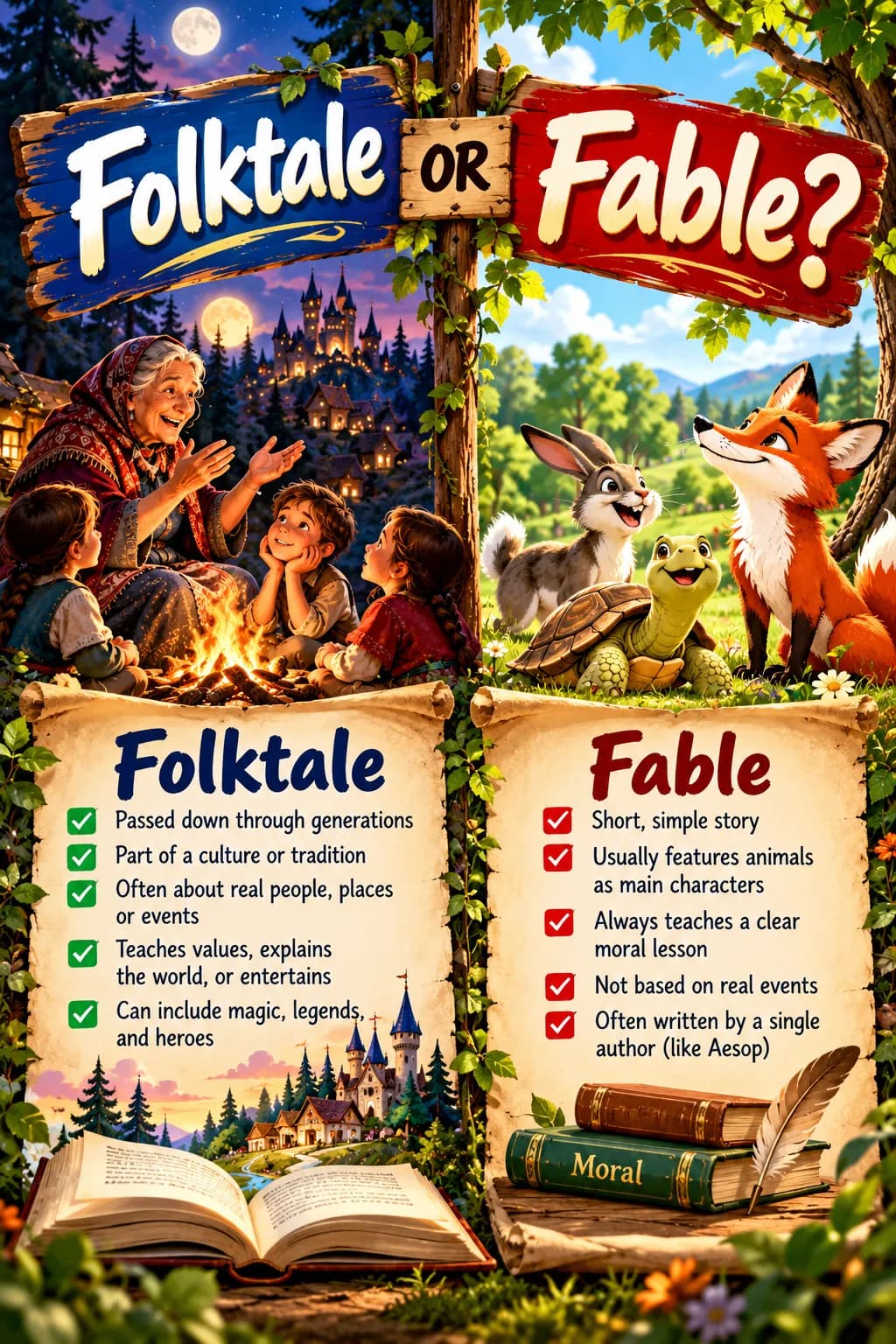
The words get swapped constantly, yet they describe genuinely different things — and knowing which is which helps you pick stories with intention.
What a fable is
A fable is short and pointed. It usually features animals standing in for human traits, and it's built to deliver an explicit moral — often stated outright at the end. Aesop is the template: the tortoise and the hare exists to make a single lesson unmistakable.
What a folktale is
A folktale is a traditional story carried through a community, often orally, across generations. It may teach, warn, explain the world, or simply entertain. Any "lesson" tends to be embedded in the story rather than tacked on — and a folktale often survives precisely because a culture kept choosing to retell it.
Where they overlap (and how to tell them apart)
A fable is really a kind of tale, so the two overlap. The quickest test is the moral: a talking-animal story that ends on a clear, stated lesson is a fable; a story that endures as part of a culture's shared storytelling is a folktale. Fairy tales, myths, and legends sit alongside these as neighbouring categories worth naming too.
Why the distinction is useful when choosing stories
Knowing the type sets expectations. A fable offers a quick, self-contained moral lesson; a folktale opens a window onto a culture and its values. Naming which one you're reaching for helps match a story to what a child needs on a given day.