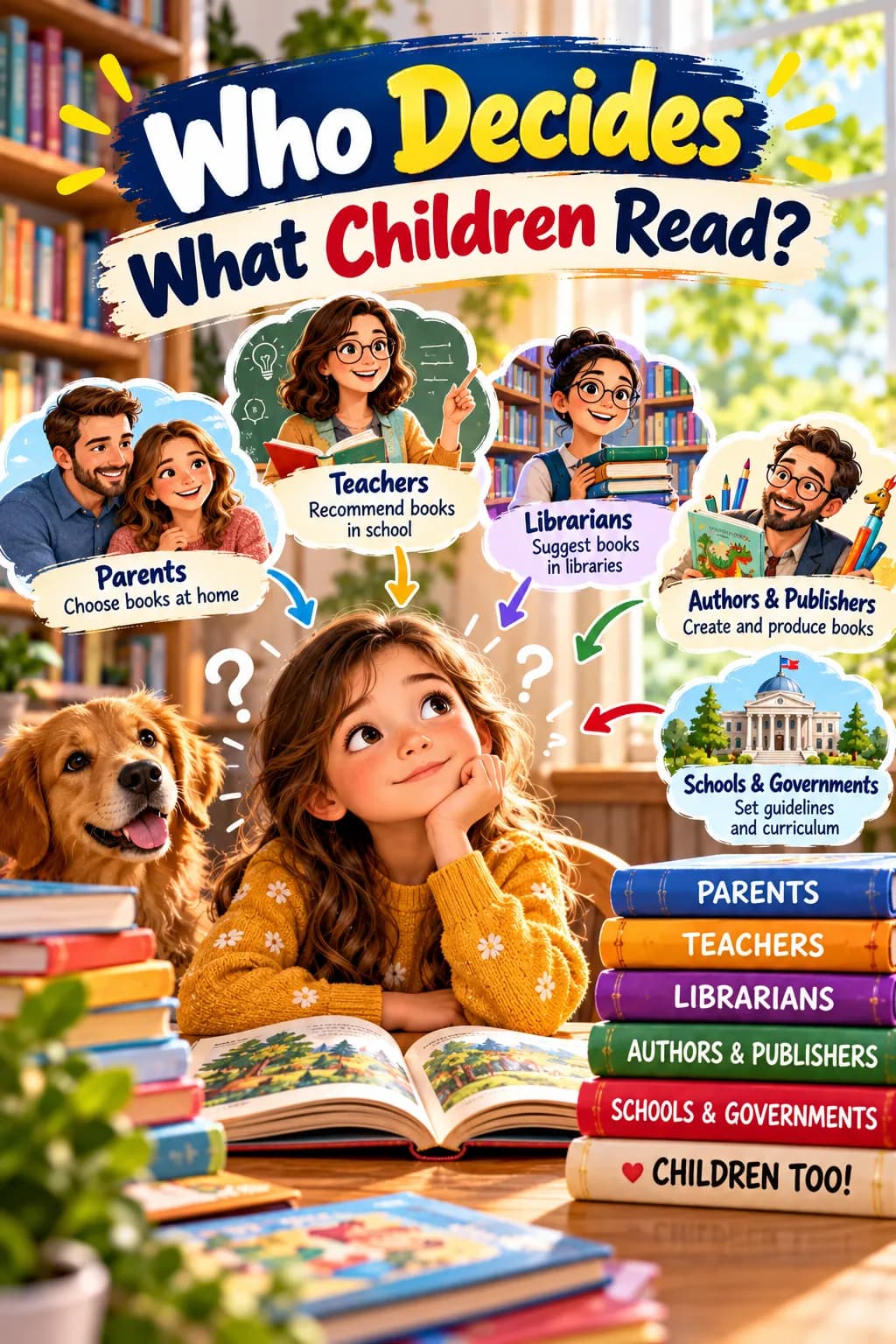
Between a book being written and a child reading it, a surprising number of people have already had a say.
The visible gatekeepers
The obvious ones are close to home: parents curating the shelf, teachers setting reading lists, and librarians selecting what a collection holds. Each is making choices — usually well-meant — about what a child encounters.
The invisible ones
Further back sit the gatekeepers a child never sees: publishers deciding what gets made at all, prize panels and "best of" lists steering attention toward some titles over others, and — increasingly — recommendation algorithms shaping what a young reader is even shown.
Guidance vs. control
The real question isn't whether to guide — of course adults do — but how much room to leave for a child's own taste, including the freedom to choose "badly" and to put a book down. Guidance that never lets go quietly becomes control.
Why the child's voice matters
Readers who get a say in what they read tend to read more. Agency isn't a nice extra — it's part of how the reading habit forms in the first place. The most durable gatekeeping leaves the final page-turn to the child.