
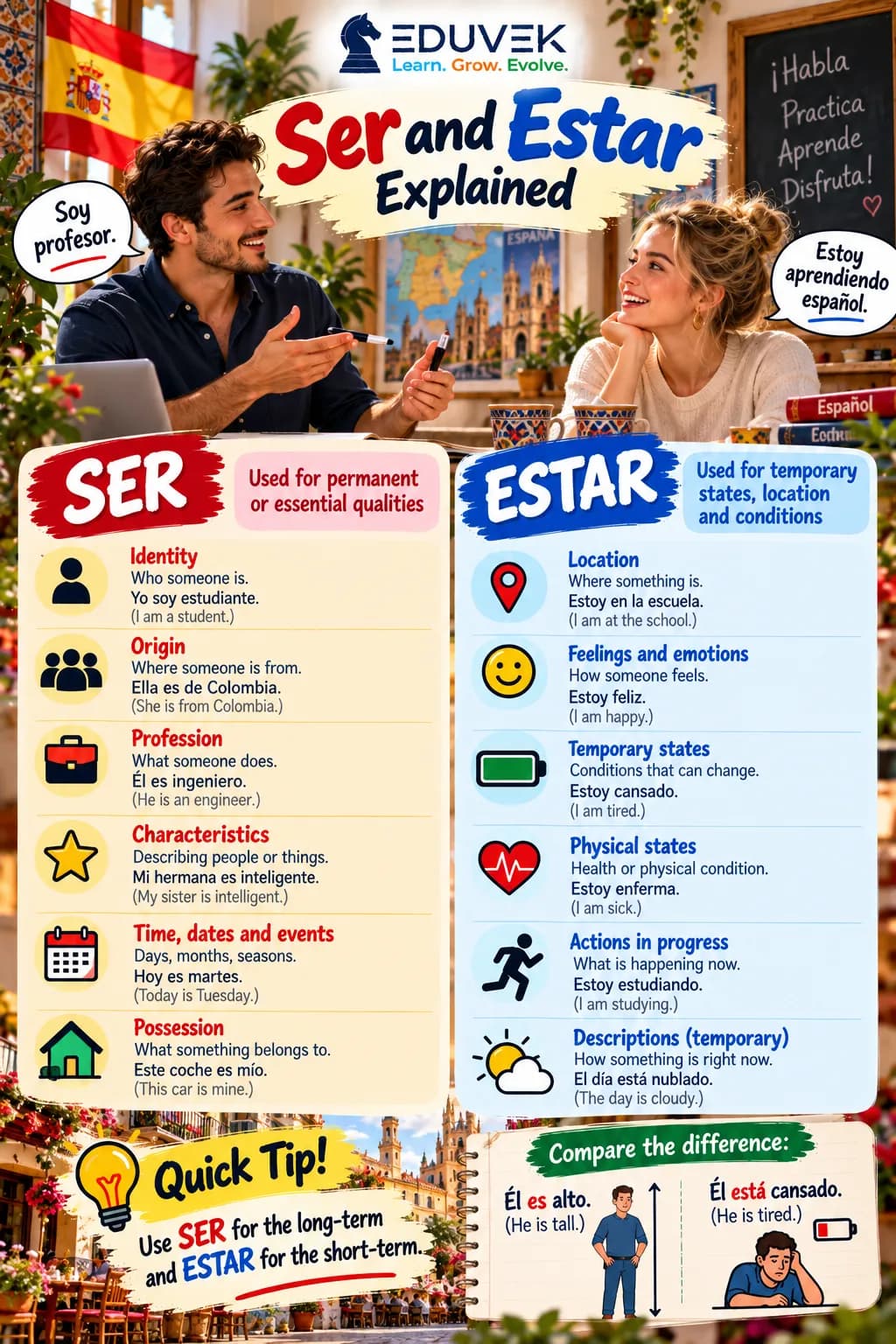
Both mean "to be," which is exactly why they cause so much trouble — but there's a workable rule of thumb underneath the confusion.
Ser: essence and identity
Use ser for what something fundamentally is: identity, origin, profession, defining characteristics, and telling the time or date. It's the verb of the essential and the lasting.
Estar: state and location
Use estar for how something is right now: conditions, feelings, and where things are located. It's the verb of the current and the changeable.
The heuristic: essence vs. state
When in doubt, ask whether you're describing what something is (ser) or how it is at the moment (estar). "Soy feliz" paints happiness as part of who you are; "estoy feliz" says you're happy right now.
The classic traps
Some adjectives flip meaning with the verb: ser aburrido = boring, estar aburrido = bored; ser listo = clever, estar listo = ready. And location always takes estar, even for permanent things ("Madrid está en España"). The essence-vs-state heuristic gets you most of the way — the exceptions are worth learning as you meet them, not memorising up front.