
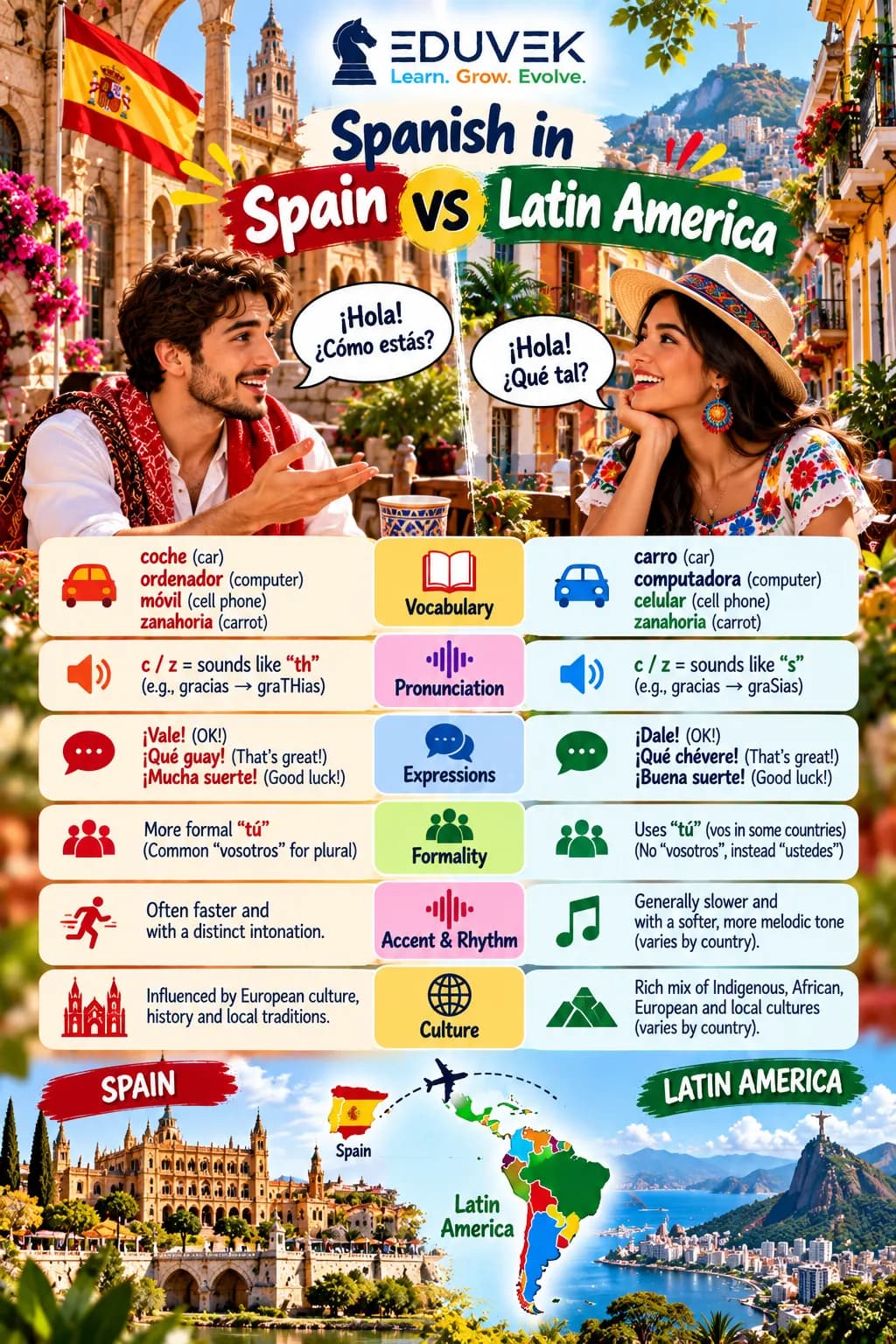
People agonise over "which Spanish," but the two are far closer than the debate suggests — mutually intelligible everywhere.
Pronunciation
The most audible difference: much of Spain pronounces c (before e/i) and z as a soft "th," while Latin America uses an "s" sound. Add regional differences in rhythm and speed, and the accents feel distinct — but they're still the same words.
Grammar: vosotros vs. ustedes
Spain uses vosotros for informal plural "you"; Latin America generally uses ustedes for everyone. It's the one structural difference worth knowing early — and it's small.
Vocabulary
Everyday words differ — the word for car, computer, or a piece of slang — much as British and American English diverge. Occasionally funny, rarely a real barrier to being understood.
Which should you learn?
For a beginner, it barely matters. Pick the variety of the place you'll use it, or simply the one your teacher speaks, and you'll understand and be understood across the Spanish-speaking world. The differences become interesting later; they shouldn't stall you at the start.