
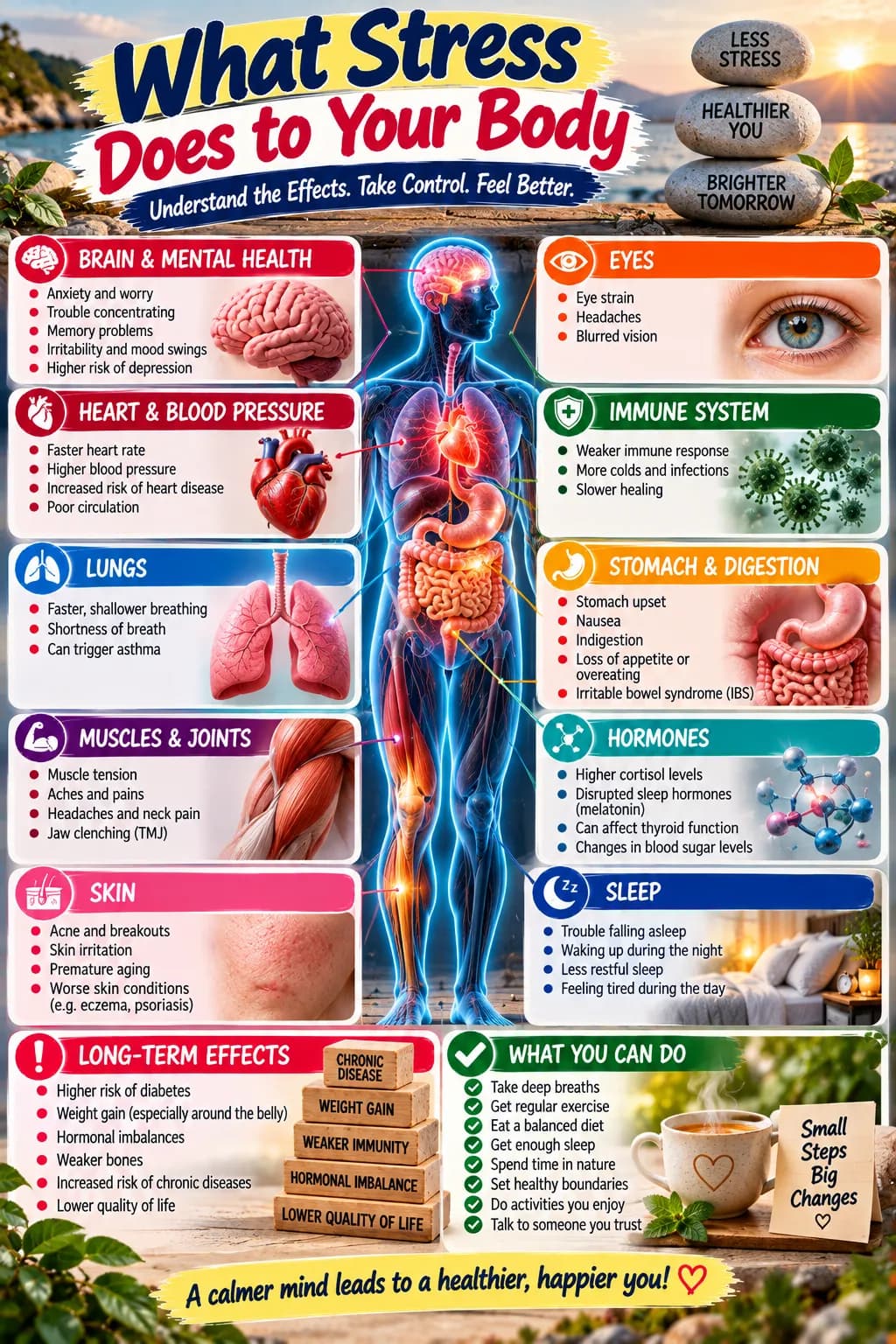
Stress isn't just a feeling — it's a full-body response, and seeing what it does makes it easier to catch early.
The stress response, in plain terms
Under pressure the body shifts into a "go" state: heart rate rises, breathing quickens, muscles tense. It's designed for short bursts — a burst of readiness, then a return to baseline.
When “on” stays on
Held too long, that same response often shows up physically — tight shoulders and jaw, shallow breathing, disrupted sleep, unsettled digestion, and a generally run-down feeling. The body wasn't built to stay switched on indefinitely.
Why noticing it early helps
The body tends to signal before the mind names it. Learning to read your own early cues — the clenched jaw, the held breath — makes them far easier to ease than waiting until they've settled in.
What you can do
Small, steadying practices — slower breathing, a deliberate pause, a genuine break — help signal to the body that it's safe to stand down. The aim isn't to eliminate stress but to stop it running unchecked.
A note on this article
This is general wellbeing education — not medical advice, diagnosis, or treatment, and not a substitute for professional care. If physical symptoms are persistent, severe, or worrying, please speak to a doctor.