LEARN
Stress Management — Reading Stress in the Body and Building Resilience
Stress management is the practical skill of noticing stress early — in your body, before it becomes a mood or a crisis — and having reliable ways to bring your system back to steady. It isn't about removing pressure from your life. It's about changing how your body responds to it.
These pages come out of the teaching of Dr. Mark Halpern, a Toronto chiropractor who has spent 30 years watching where stress lands first: in posture, breathing, sleep and energy, long before anyone names it. A certified HeartMath practitioner, he built his book and course, The Coherence Revolution, from the tools he kept after 30 years of living with anxiety and, during the first COVID lockdown, going back through every method he had tried and keeping only what worked.
Browse our vetted teachers and book your first lesson.
Stress shows up in the body first
Long before most people say the word "stress", it is already visible in the body: a jaw that won't fully unclench, shoulders carried up near the ears, breathing that has crept high and shallow into the chest, sleep that no longer leaves you rested. Thirty years of hands-on practice train you to notice these signs early.
That is the starting point of stress management as Dr. Mark teaches it — learning to read your own signals sooner, so you are responding to stress while it is still small rather than after it has taken something from you.
Coherence, and what HeartMath actually measures
As a certified HeartMath practitioner, Dr. Mark teaches a specific idea called coherence: a state in which your breathing, heart rhythm and attention line up, and heart-rate variability — the natural beat-to-beat variation in your pulse — becomes smoother and more ordered.
You don't need a device to practise it, though some people like to watch the change on one. The point is not the number. It is learning, deliberately, to shift into a steadier state — the skill at the centre of The Coherence Revolution.
Regulate first, reflect second
A great deal of stress advice asks you to think differently while your body is still in a stress response. Dr. Mark teaches the opposite order: first bring the body down a gear with breath and attention, then do the reflection and self-inquiry.
It is the sequence he arrived at after decades of testing methods and setting aside the ones that didn't hold up, drawing on teachers whose work influenced him — including Dr. Joe Dispenza, Dr. Bruce Lipton and Gregg Braden.
Where to start
If you're not sure where you sit, begin with whichever is closest to what you're feeling:
- Burnout — when demand has outrun recovery for too long.
- Breathwork — the fastest lever most people never use.
- Workplace stress — pressure, posture and short resets at your desk.
- Stress and sleep — the wired-but-tired evenings.
Each is education and wellbeing, not treatment.
Your instructor
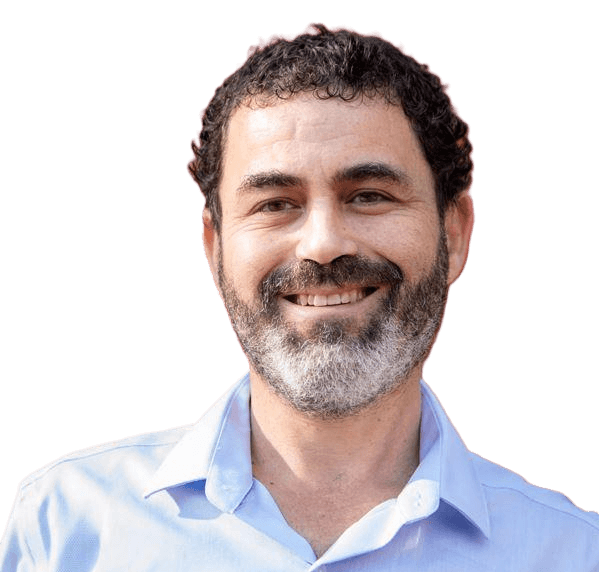
Dr. Mark Halpern
Workplace Wellness, Stress Physiology & Resilience
Dr. Mark Halpern is a chiropractor, author and lecturer who graduated from the Canadian Memorial Chiropractic College in Toronto in 1996 and has spent 30 years working with people of all ages — from children and exhausted parents to athletes, lawyers and retired teachers. He is a certified HeartMath practitioner and is also certified in PSYCH-K and Hoʻoponopono. Across his career, he has focused on one question: how stress shapes the way we feel, think and live, and what we can do about it. For over 30 years, Dr. Mark lived with anxiety himself. During the first COVID lockdown, he decided to face it head on. He went back through every book, method and practice he had tried, kept the tools that genuinely worked, and let go of the habits that didn't. That process became his book, **The Coherence Revolution: Finding Flow on Your Journey to the Present Moment**, a practical guide to self-regulation and self-inquiry. On Eduvek, Dr. Mark teaches how stress affects the body and mind — from posture and physical strain to burnout and anxiety — and gives students practical tools and a guided process to build resilience and learn to self-regulate their emotions. His approach is inspired by authors and mentors including Dr. Joe Dispenza, Dr. Bruce Lipton and Gregg Braden. Outside of teaching, he loves hiking, skiing, scuba diving, golf and cycling — especially challenges that keep him fully in the moment — and he's a guitar-playing music lover with a soft spot for Jerry Garcia and the Grateful Dead. *These courses support general wellbeing and stress management. They are not medical or psychological treatment and do not replace care from a doctor, psychologist or licensed therapist.*
View Mark's full profile →These pages are for general education and wellbeing. They are not medical or psychological treatment and do not replace care from a doctor, psychologist or licensed therapist.
Frequently asked questions
Is stress management just learning to relax?
Not quite. Relaxing is one outcome; stress management is the broader skill of noticing stress early and having reliable ways to steady your system, so you're not relying on a rare quiet moment to recover.
Do I need a wearable or an app to do this?
No. Some people like to watch their heart-rate variability change on a device, but the practices stand on their own. The skill is what matters, not the gadget.
Is this therapy or medical treatment?
No. These are educational sessions about stress and self-regulation for general wellbeing. They are not a substitute for care from a doctor, psychologist or licensed therapist — if stress is affecting your health or daily life, please speak to a professional.
Who is this for?
Anyone carrying more stress than they'd like — busy professionals, parents, students, people who have been coping so long they've forgotten what steady feels like. No experience with breathing or wellbeing practices is needed.