
LEARN
Learn Lebanese Arabic Online — Spoken Dialect, No Alphabet Needed
Lebanese Arabic is the living, spoken dialect you'll actually hear in Beirut, at family tables, and across the Lebanese diaspora — from Brazil and Argentina to the US, Canada, Australia, France, and the Gulf. It's quite different from formal Modern Standard Arabic, and you don't need the Arabic alphabet to begin: these lessons are taught in Arabizi — Lebanese Arabic written in familiar Latin letters — so you can speak from your very first lesson and add the script later only if you want to. Eduvek pairs you with a vetted native-speaking tutor for warm, practical, one-on-one lessons in real spoken Lebanese Arabic.
Browse our vetted teachers and book your first lesson.
Most Arabic courses won't teach you the Arabic people speak
If you have searched for Arabic lessons before, you have probably run into Modern Standard Arabic. It is the Arabic of newspapers, formal speeches and the news. It is also the Arabic almost nobody uses to order coffee, argue with a sibling, or tell a story at a family table.
Lebanese Arabic is a different thing. It is what people actually speak in Beirut, in Tripoli, in the mountains, and in Lebanese households from São Paulo to Sydney to Toronto. It has its own rhythm, its own vocabulary, and a generous scattering of French and English that Modern Standard Arabic never picked up.
If your goal is to speak with your grandmother, follow the conversation at your in-laws' table, or hold your own in Beirut, Modern Standard Arabic will not get you there. Lebanese will.
You don't need to learn the Arabic script
This is the second thing that stops people, and it stops them early.
Learning a new alphabet before you can say a single useful sentence is a slow, discouraging start — and for most of our students, it solves a problem they do not have. They want to speak and understand. They are not trying to read a legal contract.
So our Lebanese Arabic lessons are taught in Arabizi — Lebanese written in Latin letters, the way Lebanese people actually text each other. You start speaking in your first lesson instead of spending six weeks on letterforms.
If you later want the script, that is a separate skill you can add on top. Most students never need it.
Who learns Lebanese Arabic with us
Second and third generation Lebanese. You understood more as a child than you do now. You can follow the shape of a conversation but lose the middle of it. You want to talk to your grandparents in their language while you still can.
Partners marrying into a Lebanese family. You want to catch the jokes instead of waiting for the translation, and you would like your in-laws to hear you try.
People moving to or working in Lebanon. You want to function outside the English-speaking bubble — taxis, landlords, neighbours, the man at the bakery.
Learners of other Arabic dialects. You have MSA or Gulf Arabic and want the Levantine ear.
You do not need any prior Arabic. You also do not need to pretend you have none — if you grew up hearing it, we start from what you already have rather than from zero.
How a lesson actually works
Most of the hour is you talking.
Our lessons run roughly 70% speaking, with the remainder split across listening, reading and the small amount of grammar you need to make sense of what you are saying. Within the speaking portion, the student talks about 70% of the time and the teacher 30%. You are not watching a lecture. You are in a conversation that is being gently corrected.
Everything is presented on animated slides built for the lesson — no PDFs handed over, no textbook to buy. Games and review come at the end of a session to consolidate what you just did, not at the start as a warm-up.
Lessons are live and one-on-one over video. Your teacher can see your face, and you can see theirs, which matters more than people expect for a spoken dialect.
Before your first lesson: the placement test
Every new student takes a short online placement test before their first lesson. It is part of booking, not an optional extra.
The reason is simple. We removed the free fifteen-minute intro call that most tutoring sites use, because it wastes your time and tells the teacher very little. The placement test does the same job better: your teacher gets your result before you meet, so your first paid lesson starts at the right level instead of being spent finding out what you know.
If you later decide to work with a different teacher in the same subject, your result travels with you. You do not take it twice.
The four levels
Lebanese Arabic for Beginners — Sounds, greetings, introducing yourself, numbers, and enough everyday phrasing to survive a conversation you did not plan for.
Conversational Lebanese Arabic — The core of everyday speech. Family, food, plans, opinions, and small talk that goes somewhere.
Intermediate Lebanese Arabic — Past and future, telling stories, disagreeing politely, handling a conversation where nobody slows down for you.
Advanced Lebanese Arabic — Nuance, humour, regional differences, idioms, and the register shifts that separate a competent speaker from a comfortable one.
Not sure which one you are? That is what the placement test is for.
Your instructor
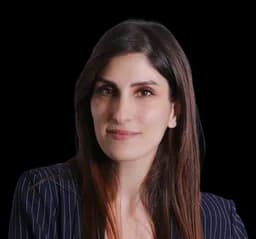
Sally Kfoury
Lebanese Arabic — Conversational Speaking Groups & Foundations · English
Sally is a qualified language educator with over a decade of teaching experience and a genuine passion for helping learners find their voice in a new language. She holds a degree in Teaching English as a Second Language and an Educational Leadership Diploma, and has spent years designing structured, engaging lessons that build real confidence. Her approach begins with strong foundations — sounds, pronunciation, and the building blocks of the language — because she believes that a clear, confident start is what carries learners all the way to fluency. Students working with Sally can expect warm, patient guidance, lessons tailored to their goals, and a focus on speaking with clarity and confidence from day one. A native Arabic speaker with full professional English proficiency, Sally teaches both Lebanese Arabic — the living, everyday language of Lebanon, taught in full, from grammar and reading to natural conversation — and English for learners of all backgrounds. Whether you're starting from scratch or refining your skills, she'll meet you where you are and help you grow, step by step. Her Lebanese Arabic online groups focus on conversational speaking and strong foundations, so you build real confidence alongside other learners.
View Sally's full profile →Frequently asked questions
Is Lebanese Arabic the same as Modern Standard Arabic?
No. Modern Standard Arabic is the formal written language used across the Arab world in media and official writing. Lebanese Arabic is the spoken dialect of Lebanon. They share roots but differ in vocabulary, pronunciation and everyday grammar. If your goal is conversation, Lebanese is the one you want.
Do I need to learn the Arabic alphabet?
No. Lessons are taught in Arabizi — Lebanese written in Latin letters. You can learn the script later if you want it, but it is not required to speak fluently.
I understood Arabic as a child but can't speak it now. Where do I start?
This is one of the most common situations we see, and it is a good starting point rather than a problem. Take the placement test — passive comprehension usually places people higher than they expect.
How long is each lesson?
Each lesson is 60 minutes, one-on-one and live over video.
What does it cost?
You book lessons by the hour, and you'll see the rate when you choose how many hours you want on the booking page. Your first lesson with a teacher is a single lesson; after that you buy blocks of hours.
Can I try one lesson before committing?
Yes. New students book a single lesson with a teacher first. You only continue with that teacher once you have both confirmed the fit after that lesson.
What if I want to switch teachers?
You can. Your placement result is forwarded automatically so you do not repeat it.
Will Lebanese Arabic help me in other Arab countries?
Levantine Arabic — Lebanese, Syrian, Palestinian, Jordanian — is widely understood across the region, partly because so much Arabic-language film, music and television comes out of the Levant and Egypt. You will be understood well beyond Lebanon.