The English newcomers need first isn't exam English — it's the language of getting set up and getting by.
The English of getting established
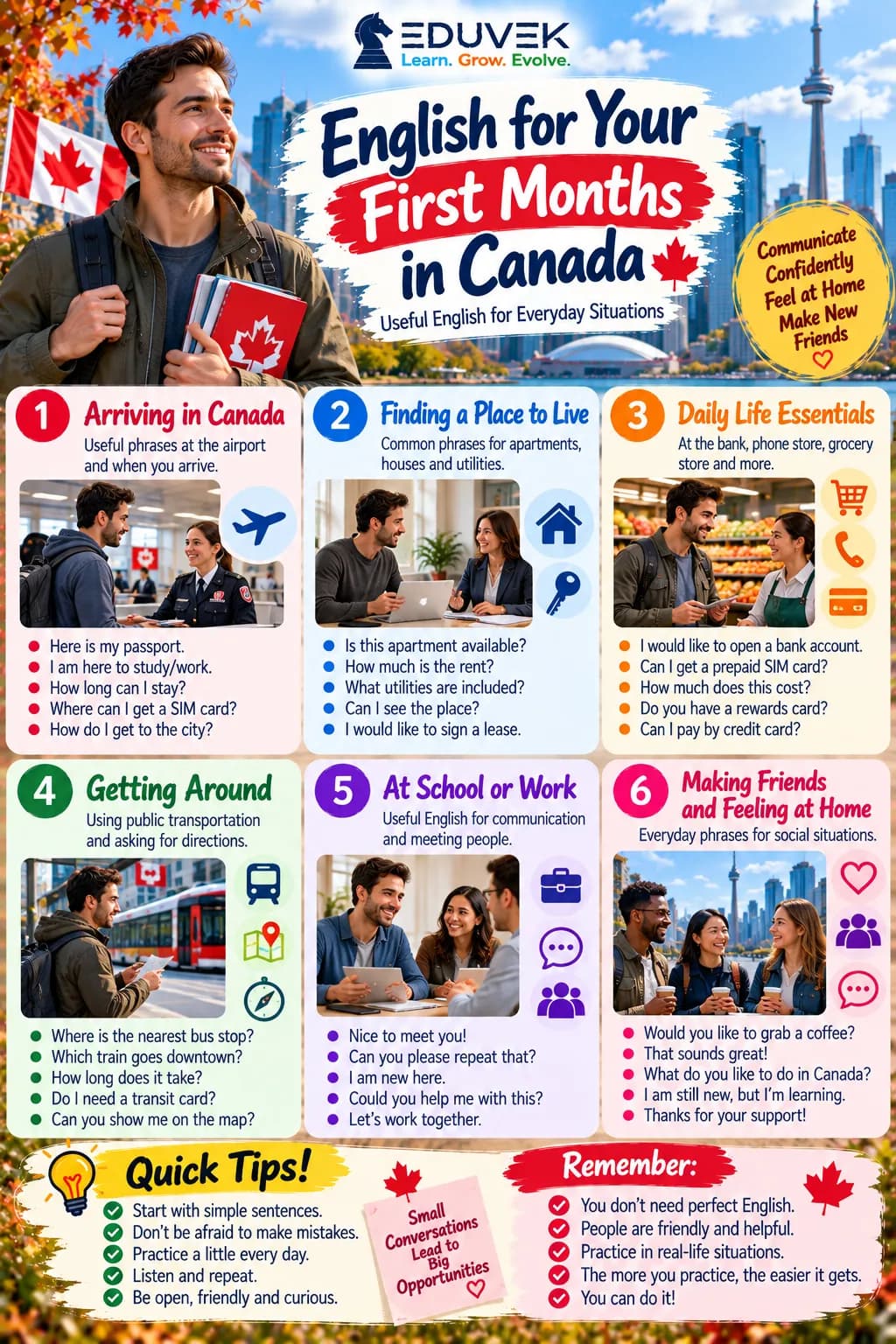
The early weeks are full of practical encounters, each with its own vocabulary: opening a bank account, arranging housing and utilities, getting a phone plan, applying for a health card, booking appointments. Learning the specific words and phrases these use — the questions you'll be asked and the ones you'll need to ask — removes a lot of friction.
Everyday and workplace conventions
Some of it is cultural rather than grammatical: the frequent, low-stakes "sorry," a tendency toward indirect requests, and small talk that greases everyday interactions. Workplaces have their own norms too — how to ask for clarification, take a message, or raise a problem politely.
Institutional English
The clinic, the school, and government forms each speak their own register, often more formal than daily conversation. Learning to navigate that institutional English — and to ask someone to repeat or rephrase without embarrassment — is a skill of its own, separate from the language you learned in class.
Where to get help
You don't have to work it out alone. Settlement and newcomer services, public libraries, and free or low-cost language programs exist specifically to help — and asking for help is a normal, expected part of arriving. A patient teacher can also build lessons around the real letters, forms, and conversations in front of you.