Everyone wants a number, and every honest answer starts with "it depends" — but the things it depends on are knowable.
"Fluent" means different things
Ordering coffee, holding a work meeting, and passing for a native speaker are wildly different bars. Before you can estimate a timeline, you have to name which one you actually want — most people need "comfortable in daily and working life," not "indistinguishable from a native," and those sit years apart.
What actually drives the pace
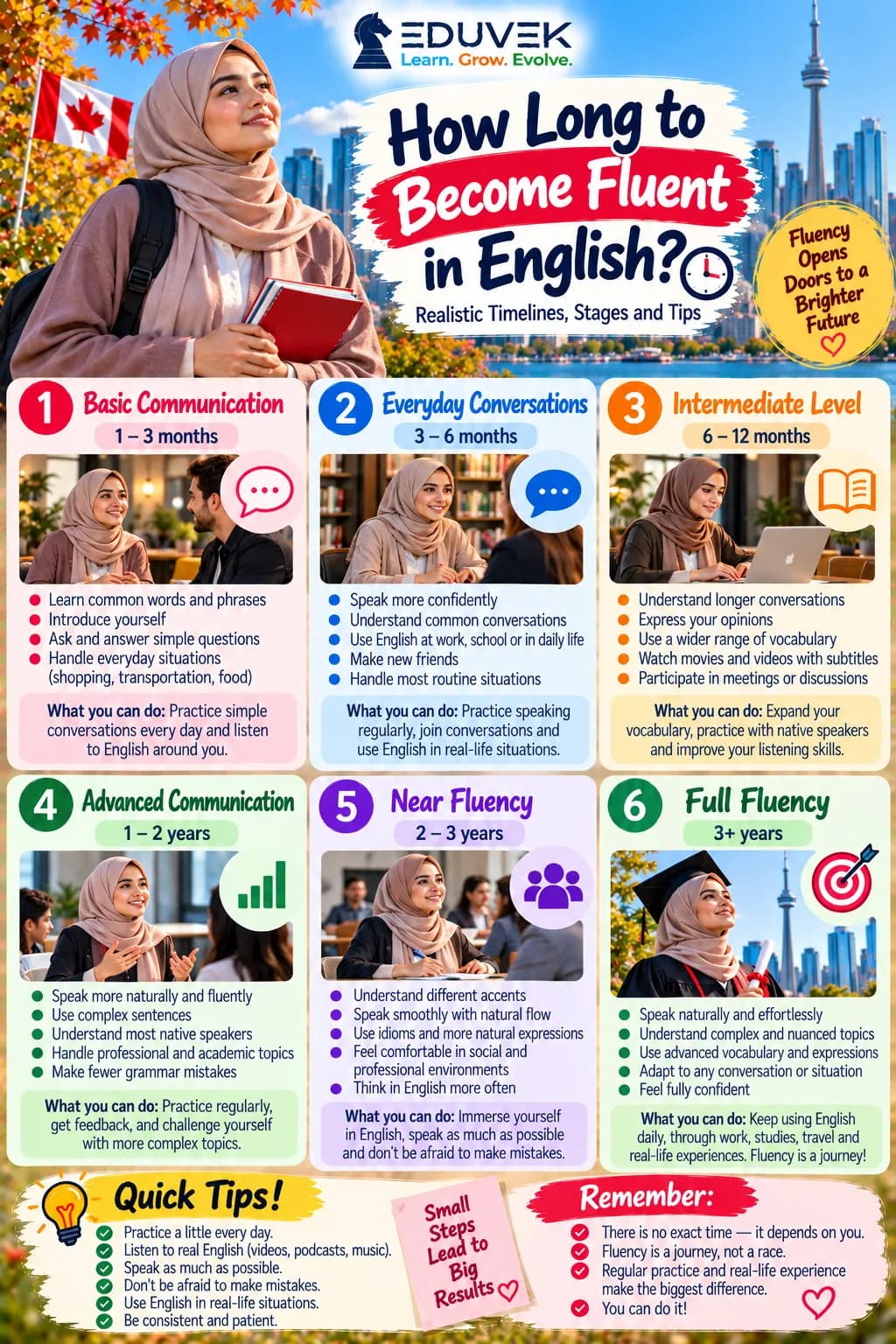
Four things matter most: your starting point, how close your first language is to English, how many hours of real practice you get each week, and whether you're immersed in an English-speaking environment. Two learners can be months or years apart on the same "course" because of these.
Rough, honest ranges
Conversational comfort, confident professional ability, and near-native fluency each sit on very different horizons — from months, to a few years, to much longer. Rather than chase a single figure, aim at the level you need and track progress against it. Consistency beats intensity: steady weekly practice outperforms occasional bursts.
Why "fluent in X weeks" is a myth
Claims like "fluent in six weeks" work by quietly redefining "fluent" down to a handful of memorised phrases. Real fluency is built through steady practice over time — there's no shortcut that survives contact with a real conversation.