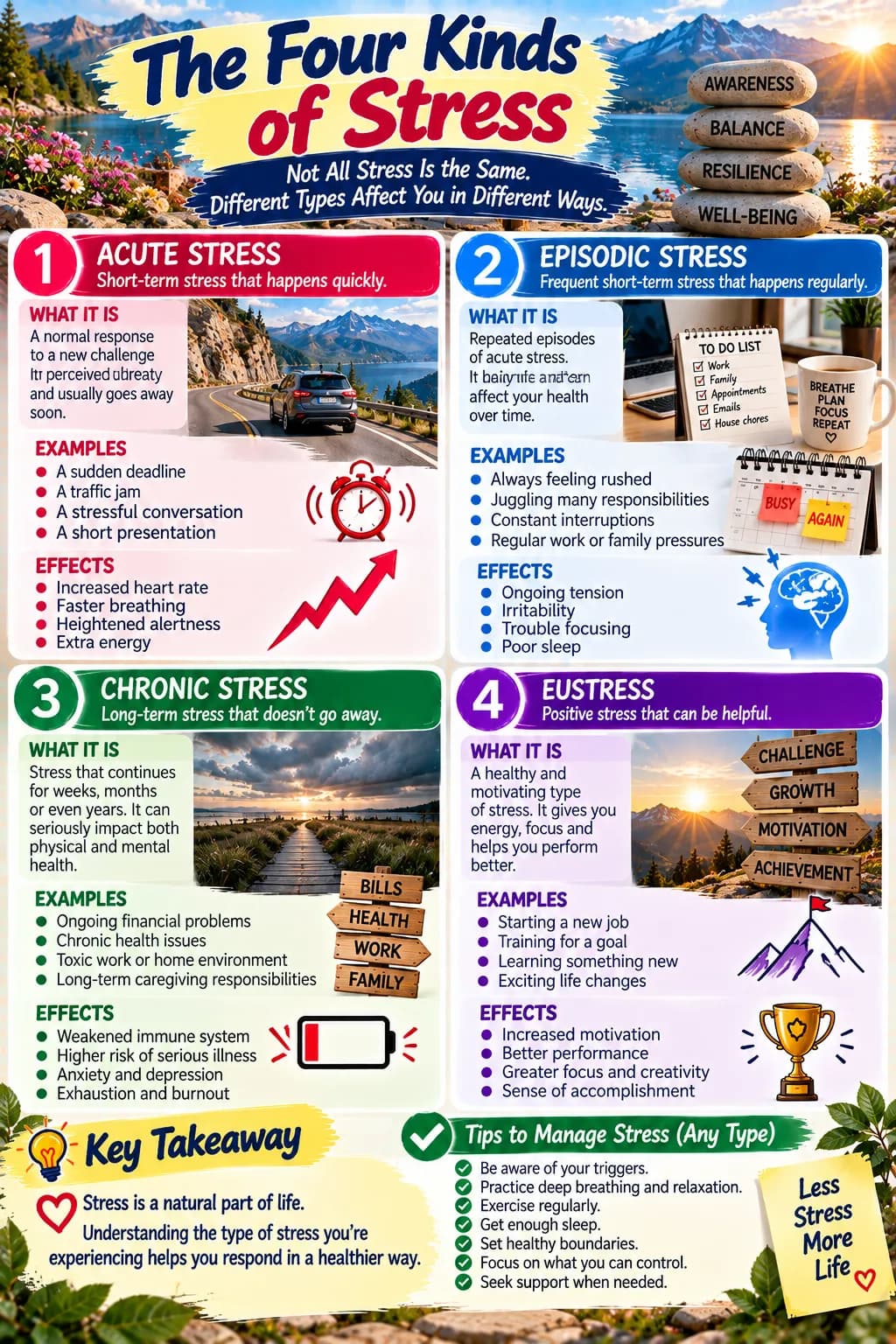
"Stress" is one word for several different things — and naming them makes it easier to respond to the right one.
The four kinds Dr. Mark teaches
In the framework Dr. Mark teaches, stress arrives in four forms. Physical is the load the body carries directly — posture, injury, overuse, too little movement or too little sleep. Chemical is what you take in — food, caffeine, alcohol, medications and the substances of daily life. Emotional is the worry, pressure and grief most people mean when they say "stress." The fourth, electromagnetic, is the one his framework adds — the idea that the electronic devices and signals around us carry their own kind of load.
A note on electromagnetic stress
This fourth category is part of the framework Dr. Mark teaches in his course, not a settled scientific consensus — we present it here as what he teaches rather than as established science. In his approach, the point is practical: to notice how much of the day is spent wired to devices, and to build in deliberate breaks from them, the same way you would from any other load.
Why they stack
The four rarely arrive one at a time. They often combine — a poor night's sleep, too much coffee, a hard conversation, a day glued to screens — so the body just registers "everything at once." Naming which loads are actually stacking up is what turns a vague overwhelm into something you can act on.
Spotting your mix
A short, honest inventory usually reveals that one or two kinds dominate your weeks. Once you can see your own mix, the useful question stops being "how do I get rid of stress" and becomes "which load do I ease first" — and that's a far easier place to start.
A note on this article
This is general wellbeing education — not medical advice, diagnosis, or treatment, and not a substitute for professional care. If stress is affecting your health, please speak to a doctor or a qualified professional.