
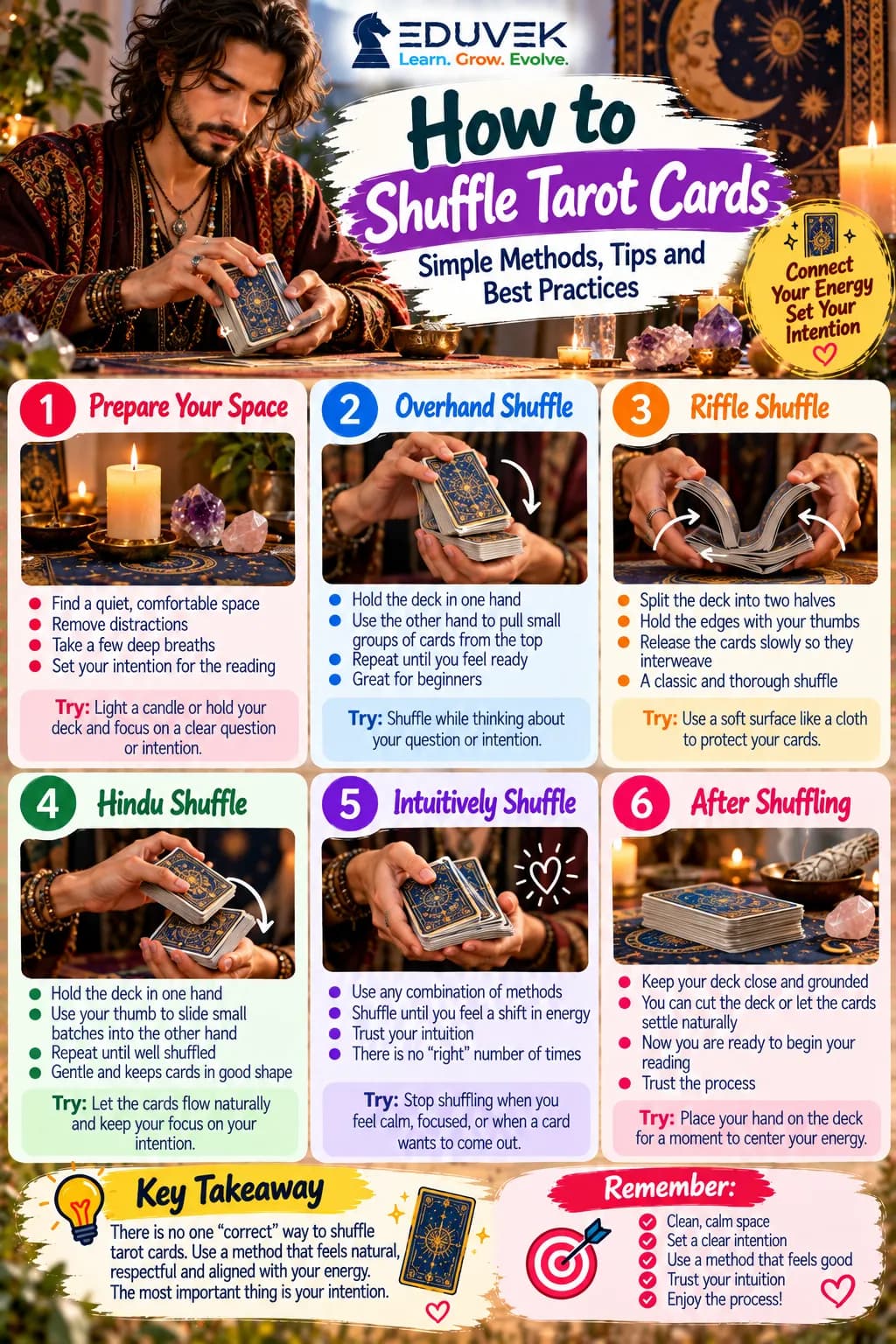
Shuffling attracts more mystique than it needs — here's the practical truth, and why the "right" technique matters less than people assume.
What shuffling is actually for
Two plain things: mixing the cards, and giving you a moment to settle and focus your attention before you read. The second is arguably the more useful — a small pause that marks the start of a reflection.
Common methods
Any of these works: the overhand shuffle (sliding small packets over in the hand), the riffle (splitting and interleaving two halves), the wash (spreading the cards face-down and swirling them around), and cutting the deck into piles and restacking. Each simply mixes the cards.
Why the method matters less than you think
There's no single correct way. What matters is that you settle and pay attention, not the mechanics. Habits like cutting with the left hand, or shuffling "until it feels done," are personal preferences — not rules you're getting wrong.
Find a way that suits you
A large deck is awkward to riffle and easy to bend, so many readers prefer an overhand shuffle or a wash. Comfortable and repeatable beats "proper." Treat shuffling as a small ritual of attention that eases you into the reading.