LEARN
Burnout: Recognising the Early Signs and Practising Recovery
Burnout is what happens when demand outruns recovery for long enough that ordinary rest stops restoring you. It isn't the same as a hard week, and it isn't a character flaw — it's a state that builds gradually, with early signs you can learn to notice.
Dr. Mark Halpern has spent 30 years working with the people who tend to burn out quietly — lawyers, exhausted parents, retired teachers, athletes who push straight through. As a chiropractor he sees it in the body first; as a certified HeartMath practitioner and the author of the book The Coherence Revolution, he teaches practical ways to build recovery back into an overloaded life.
Browse our vetted teachers and book your first lesson.
What you'll learn
- The difference between being very tired and being burned out
- Early signals to watch for — in sleep, breathing, posture and energy
- Why time off alone often isn't enough to reset an overloaded system
- How to build small, repeatable recovery into an ordinary week
- Simple breathing and coherence practices to help steady your system
- How to tell when it's time to involve a professional
Who it's for
People in high-responsibility roles, carers and parents running on empty, and anyone who has been coping for so long they've lost track of what steady feels like. No prior experience with wellbeing practices is needed.
The signals that come before the word “burnout”
Burnout rarely announces itself. More often it shows up first in the body: sleep that no longer leaves you rested, breathing held high and shallow, a posture that's quietly collapsing forward, minor illnesses that linger longer than they should. Thirty years in practice teach you to recognise these patterns — and to take them seriously earlier than most people do.
Learning to read your own early signals is the first thing Dr. Mark works on here. The sooner you notice, the smaller the response you need.
Recovery as something you practise, not something you wait for
A week away can help, but it rarely resets a nervous system that has been running in a high gear for months. What Dr. Mark teaches instead is recovery as a daily skill: short, deliberate ways to bring your system down a gear — breath, attention, the coherence practices at the heart of his course — so that steadying yourself stops depending on finally reaching a holiday.
The aim isn't to do more. It's to make recovery a normal, repeatable part of the week.
Your instructor
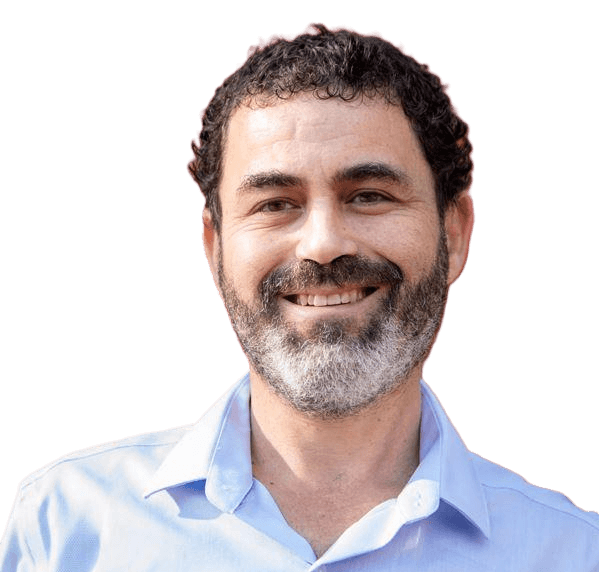
Dr. Mark Halpern
Workplace Wellness, Stress Physiology & Resilience
Dr. Mark Halpern is a chiropractor, author and lecturer who graduated from the Canadian Memorial Chiropractic College in Toronto in 1996 and has spent 30 years working with people of all ages — from children and exhausted parents to athletes, lawyers and retired teachers. He is a certified HeartMath practitioner and is also certified in PSYCH-K and Hoʻoponopono. Across his career, he has focused on one question: how stress shapes the way we feel, think and live, and what we can do about it. For over 30 years, Dr. Mark lived with anxiety himself. During the first COVID lockdown, he decided to face it head on. He went back through every book, method and practice he had tried, kept the tools that genuinely worked, and let go of the habits that didn't. That process became his book, **The Coherence Revolution: Finding Flow on Your Journey to the Present Moment**, a practical guide to self-regulation and self-inquiry. On Eduvek, Dr. Mark teaches how stress affects the body and mind — from posture and physical strain to burnout and anxiety — and gives students practical tools and a guided process to build resilience and learn to self-regulate their emotions. His approach is inspired by authors and mentors including Dr. Joe Dispenza, Dr. Bruce Lipton and Gregg Braden. Outside of teaching, he loves hiking, skiing, scuba diving, golf and cycling — especially challenges that keep him fully in the moment — and he's a guitar-playing music lover with a soft spot for Jerry Garcia and the Grateful Dead. *These courses support general wellbeing and stress management. They are not medical or psychological treatment and do not replace care from a doctor, psychologist or licensed therapist.*
View Mark's full profile →These pages are for general education and wellbeing. They are not medical or psychological treatment and do not replace care from a doctor, psychologist or licensed therapist.
Frequently asked questions
Isn't burnout just being very tired?
Tiredness usually lifts with rest. Burnout is when rest stops restoring you and the tiredness comes with things like low motivation, disrupted sleep and a body that won't settle. Noticing that difference early is the point of this page.
Will a holiday fix it?
A break can help, but on its own it often isn't enough — an overloaded system tends to slide back without a change in the daily pattern. That's why the focus here is on small, repeatable recovery rather than one big reset.
Can I catch it before it gets bad?
Often, yes — the earlier you notice the signals, the smaller the change needed. Learning to read your own early signs is exactly what these sessions work on.
When should I speak to a professional?
If burnout is affecting your health, your mood or your ability to function day to day, please talk to a doctor or licensed professional. These sessions support general wellbeing and are not a substitute for that care.